Why a fabric wears through at the fold
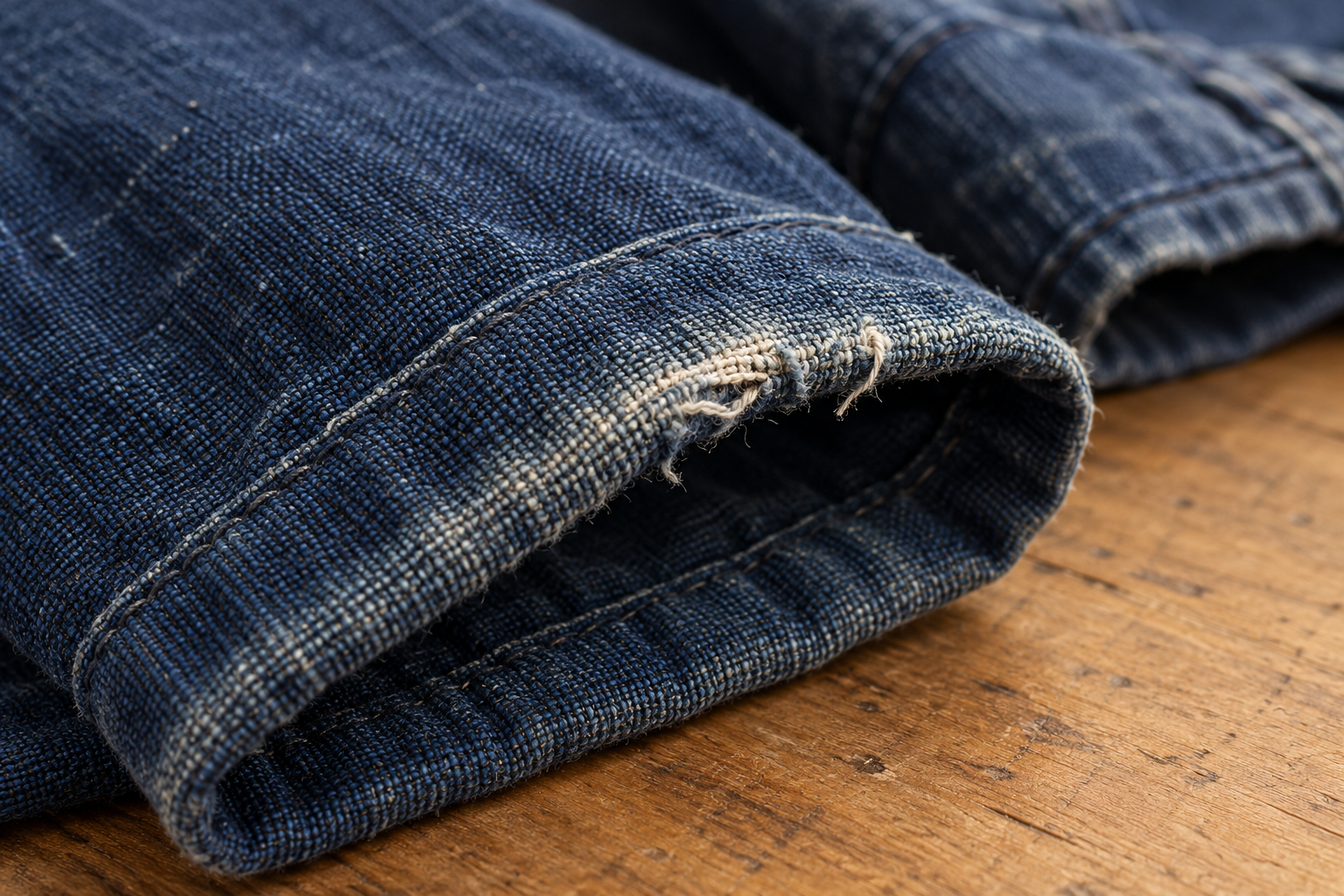
A fold puts the same narrow strip of cloth through repeated bending and exposes its ridge to rubbing. Fiber, yarn, weave and care decide how that wear develops.
About the author
I write about textiles as structures made to be used. I follow fibres through spinning, weaving, dyeing and care, with an interest in the material reasons fabrics behave differently.
I build each essay around a concrete question, read the underlying sources and separate observed results from interpretation. I want the details to remain clear enough that a reader can follow the argument and examine the evidence.
A fold puts the same narrow strip of cloth through repeated bending and exposes its ridge to rubbing. Fiber, yarn, weave and care decide how that wear develops.
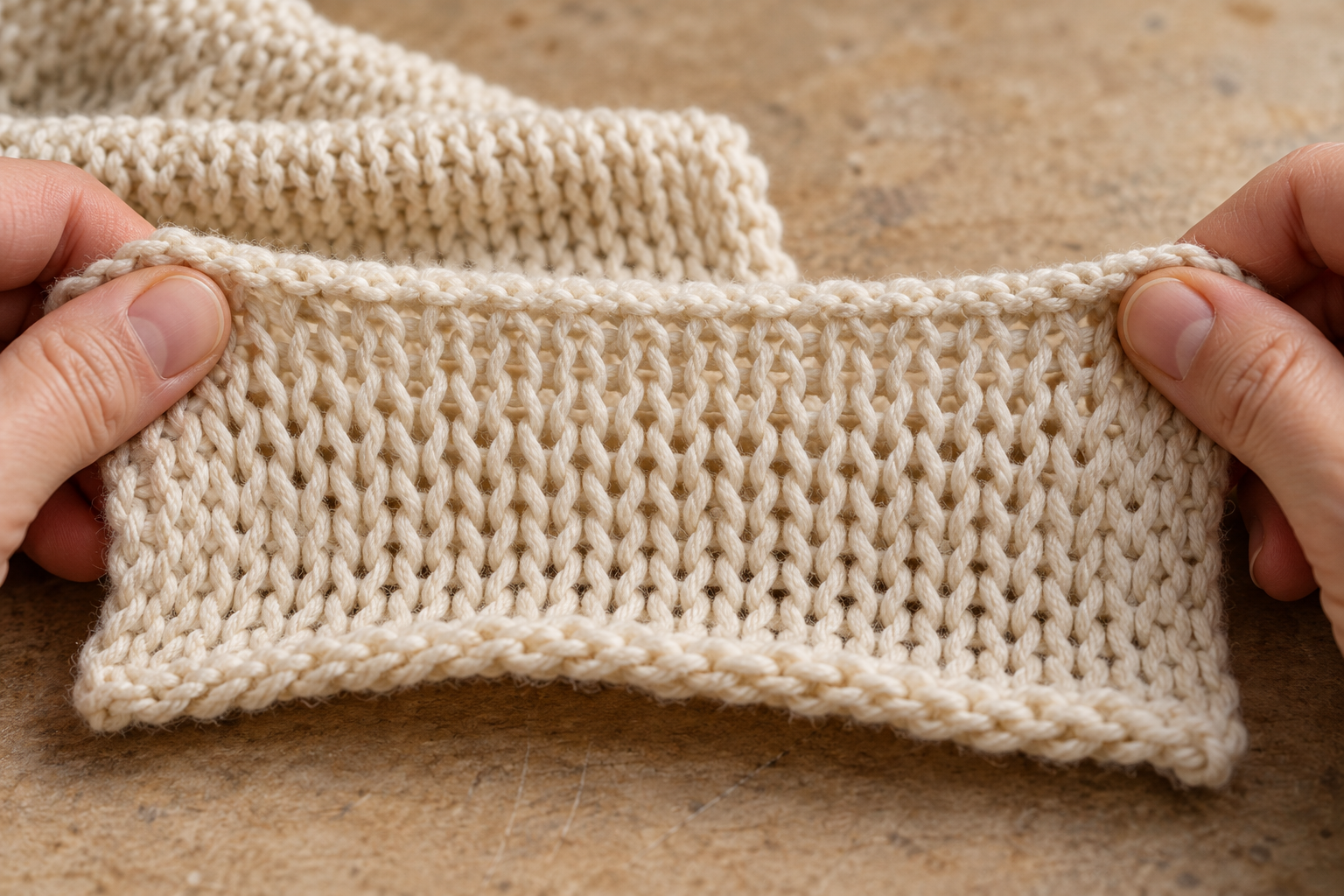
A knit can lengthen as its loops change shape, before much of the yarn itself stretches. Stitch pattern, direction, friction and yarn decide how it returns.
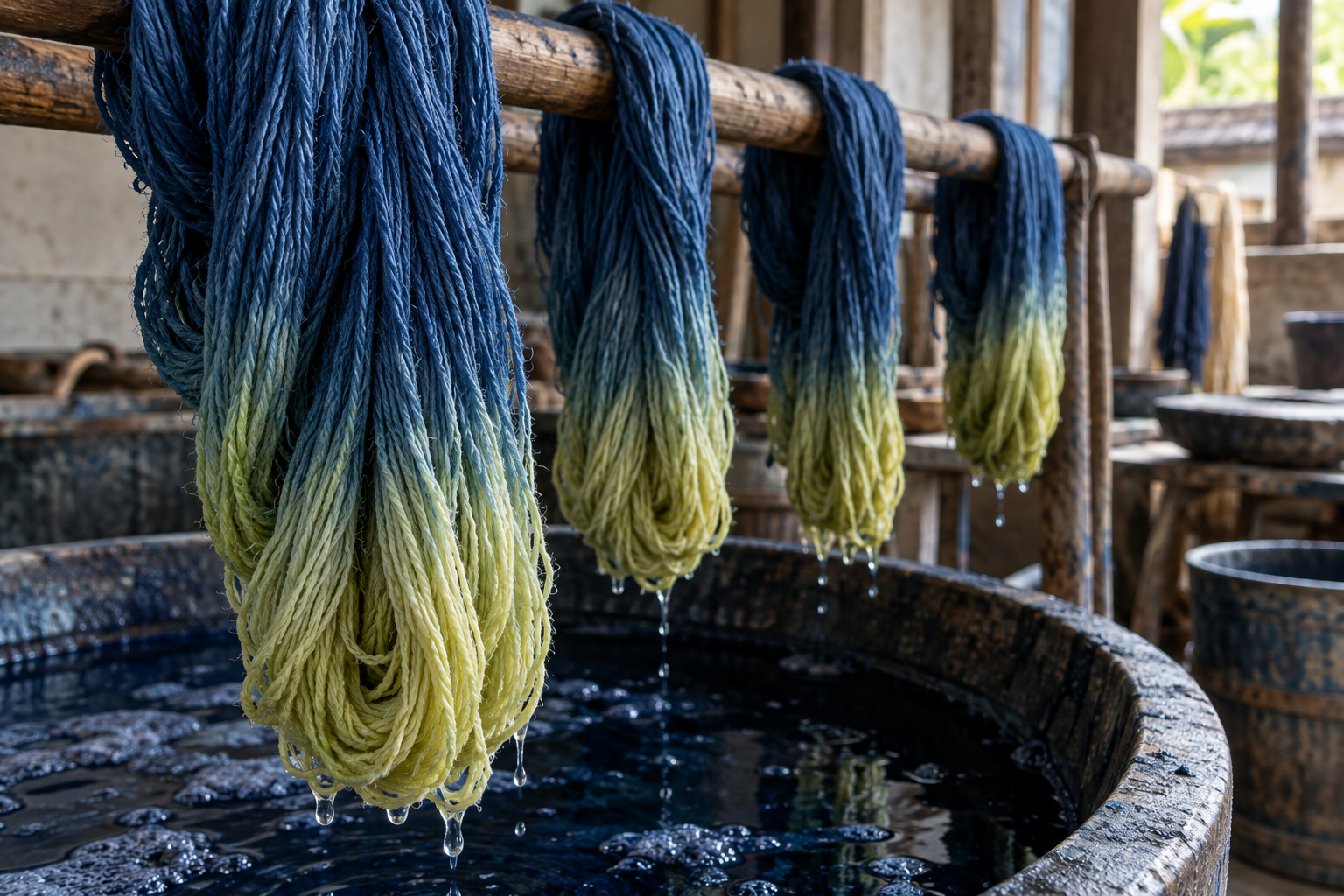
Indigo enters a vat in one chemical form and leaves the air as another. The depth at which its blue settles helps explain denim's colour, wool's different response, and the marks of wear.
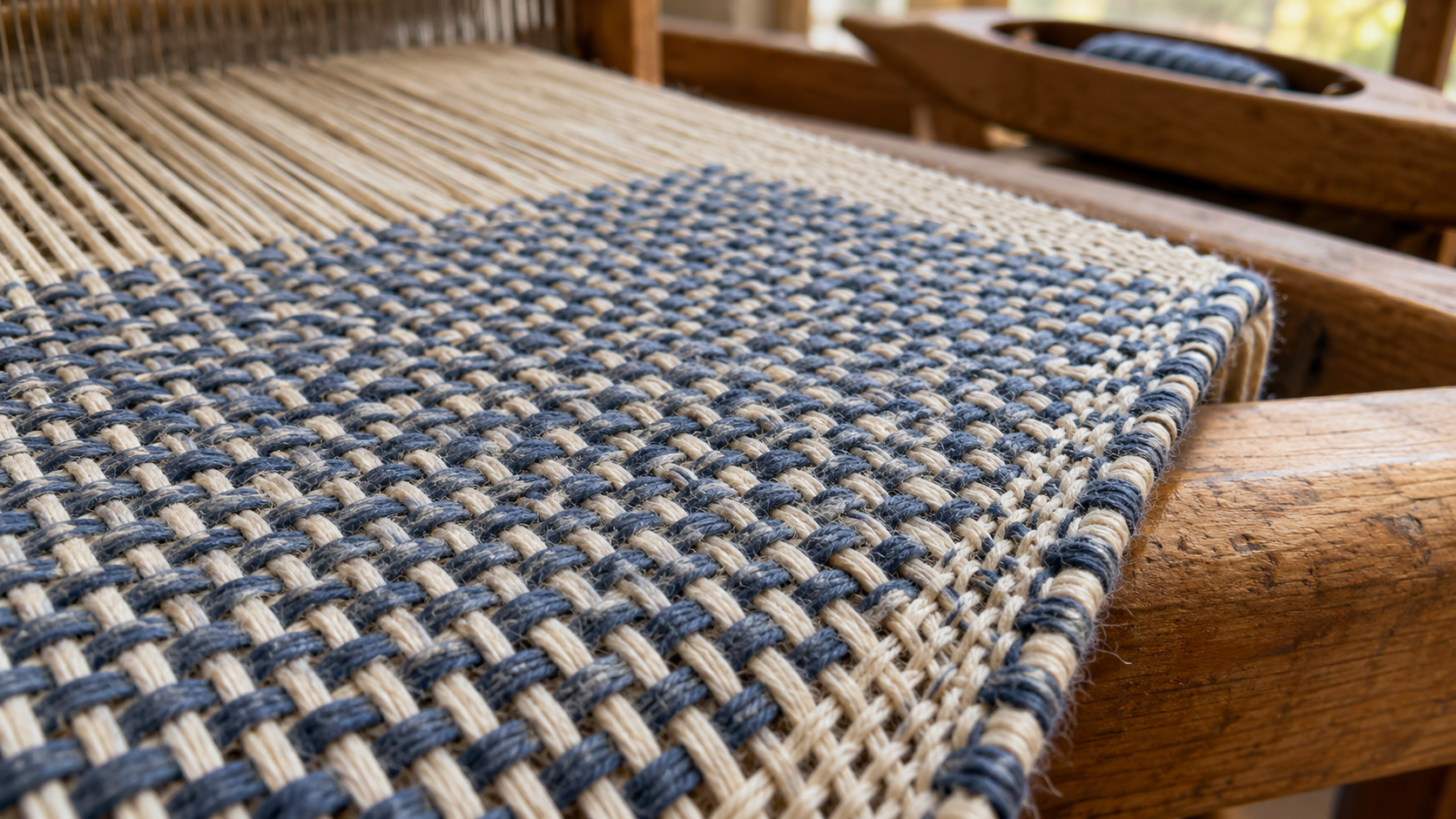
A woven cloth has an edge made by the path of its threads. Follow a shuttle’s return, then the different ways a shuttleless loom secures each cut weft, and the small allowance of slack that keeps the edge straight.
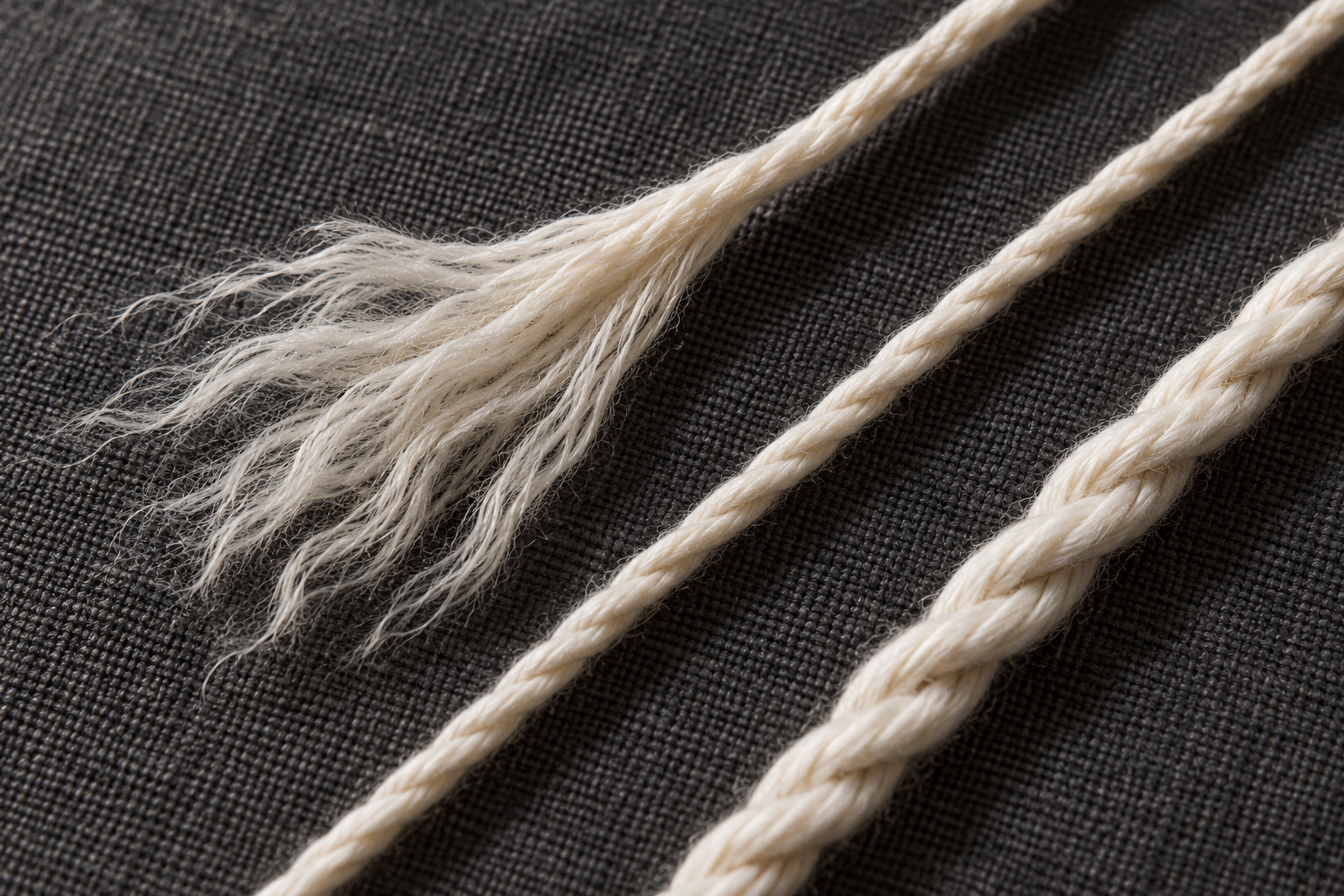
A spun thread holds together because its short fibers grip one another. Twist increases that grip, but too much turns the fibers away from the line of a pull. The strongest yarn balances both effects.
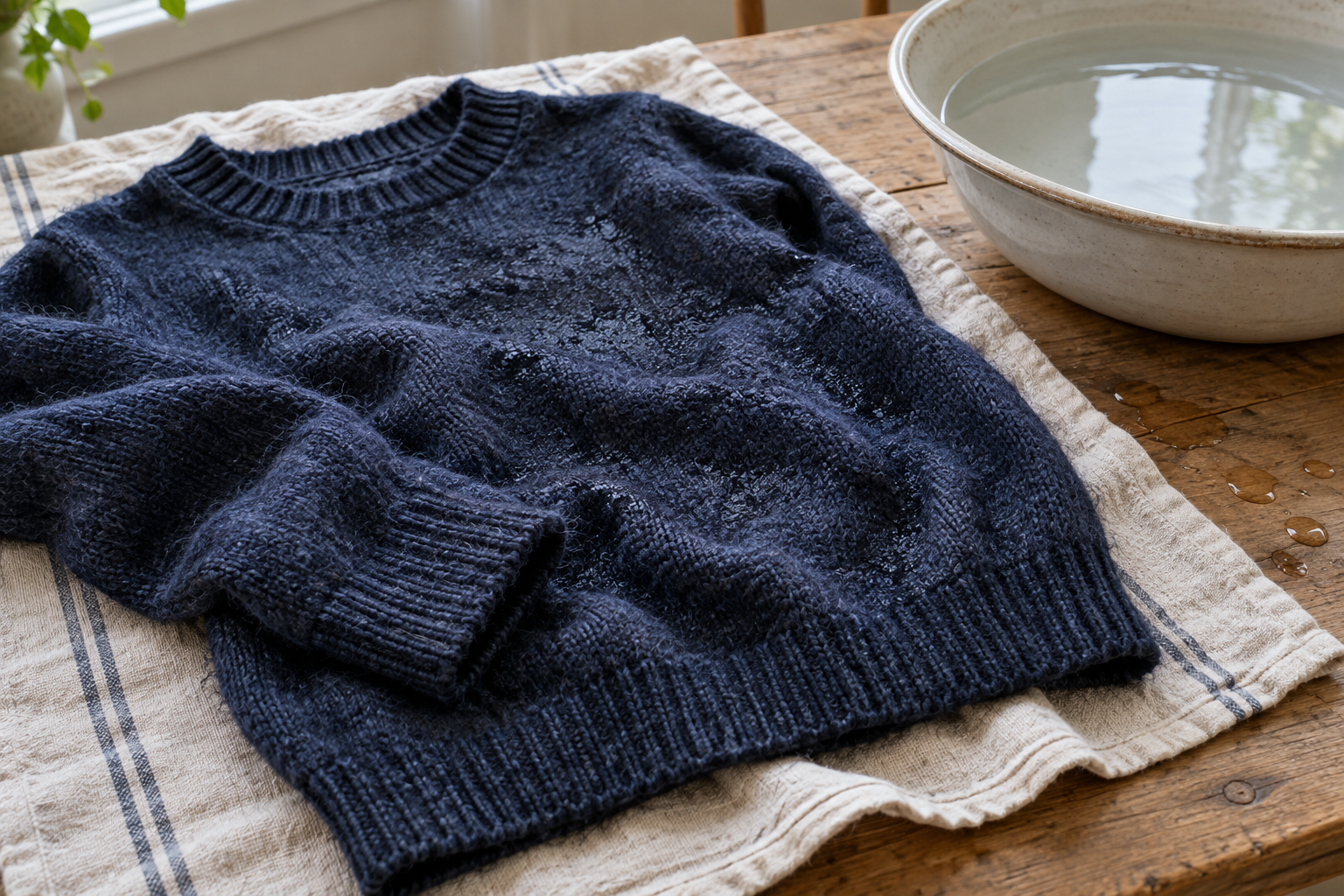
A damp wool garment can swell, relax, or felt. The three changes happen at different scales and for different reasons, so the shape you see after washing tells only part of the story.